What is considered a sprint and why are they important?
Sprint methodology addresses the complexity of large software development projects by providing a framework in which projects can be broken down into chunks.
A sprint is a short period of time, typically between one and six weeks, during which a scrum or agile team works to complete a specific product addition.
The goal of a sprint is to facilitate a streamlined and rapid delivery of high-quality work while allowing for the flexibility to adapt to changes.
The importance of sprint planning has been well documented and cannot be overstated because it not only facilitates shipping but also sets teams up for success by establishing clear goals and expectations.
To achieve a higher return on investment, product owners must ensure that all involved individuals are on the same page. As more control is given to the team, a carefully crafted sprint plan has an impact on the entire software development life cycle and business. Product backlogs are better managed, and customer satisfaction is significantly increased.
Atlassian's Jira is a project management tool used for tracking, case management, agile software development, and more. Let’s create a sprint in Jira using Keypup's tools for tracking a team's progress.
Create a Sprint Board in Jira
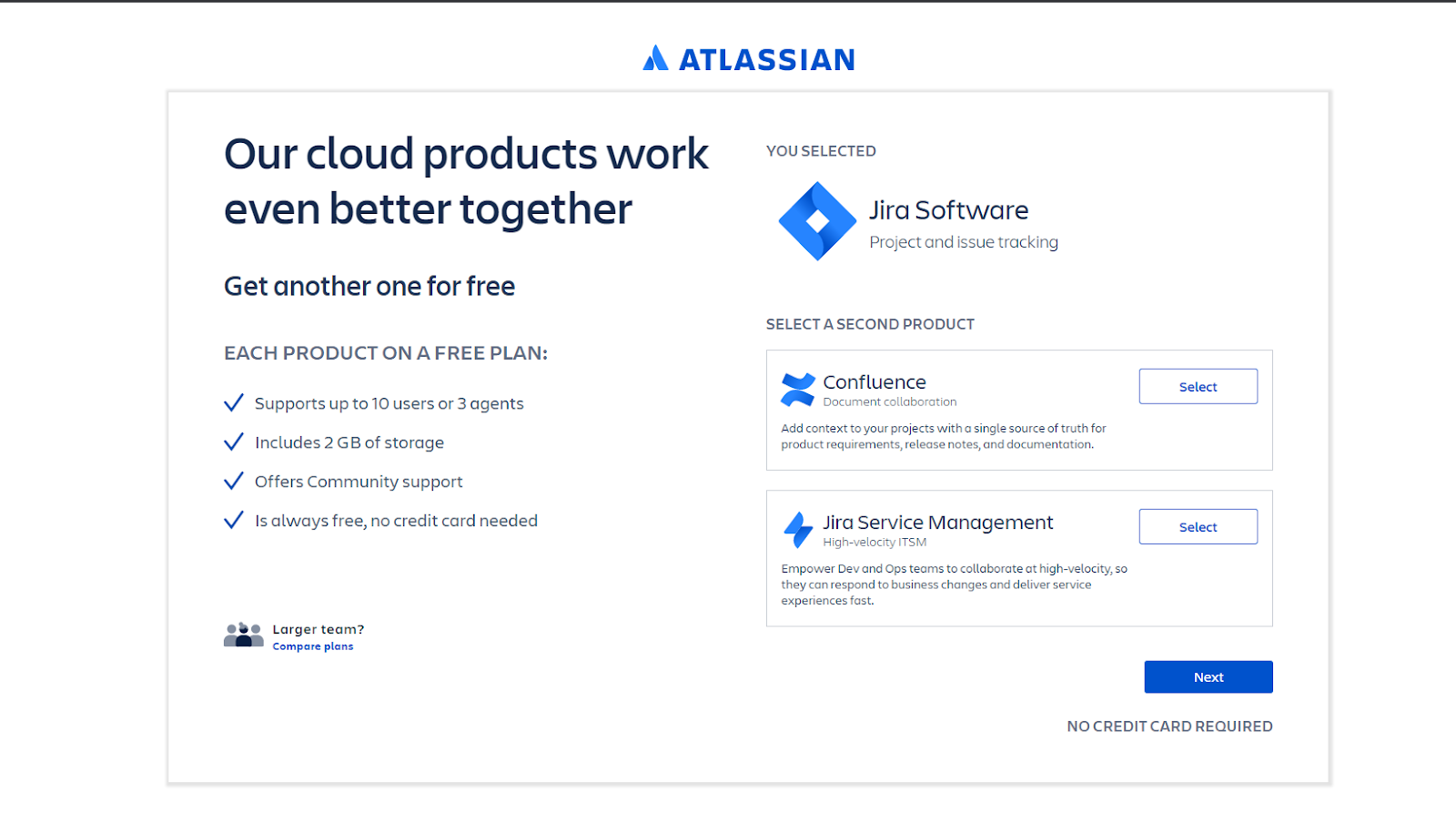
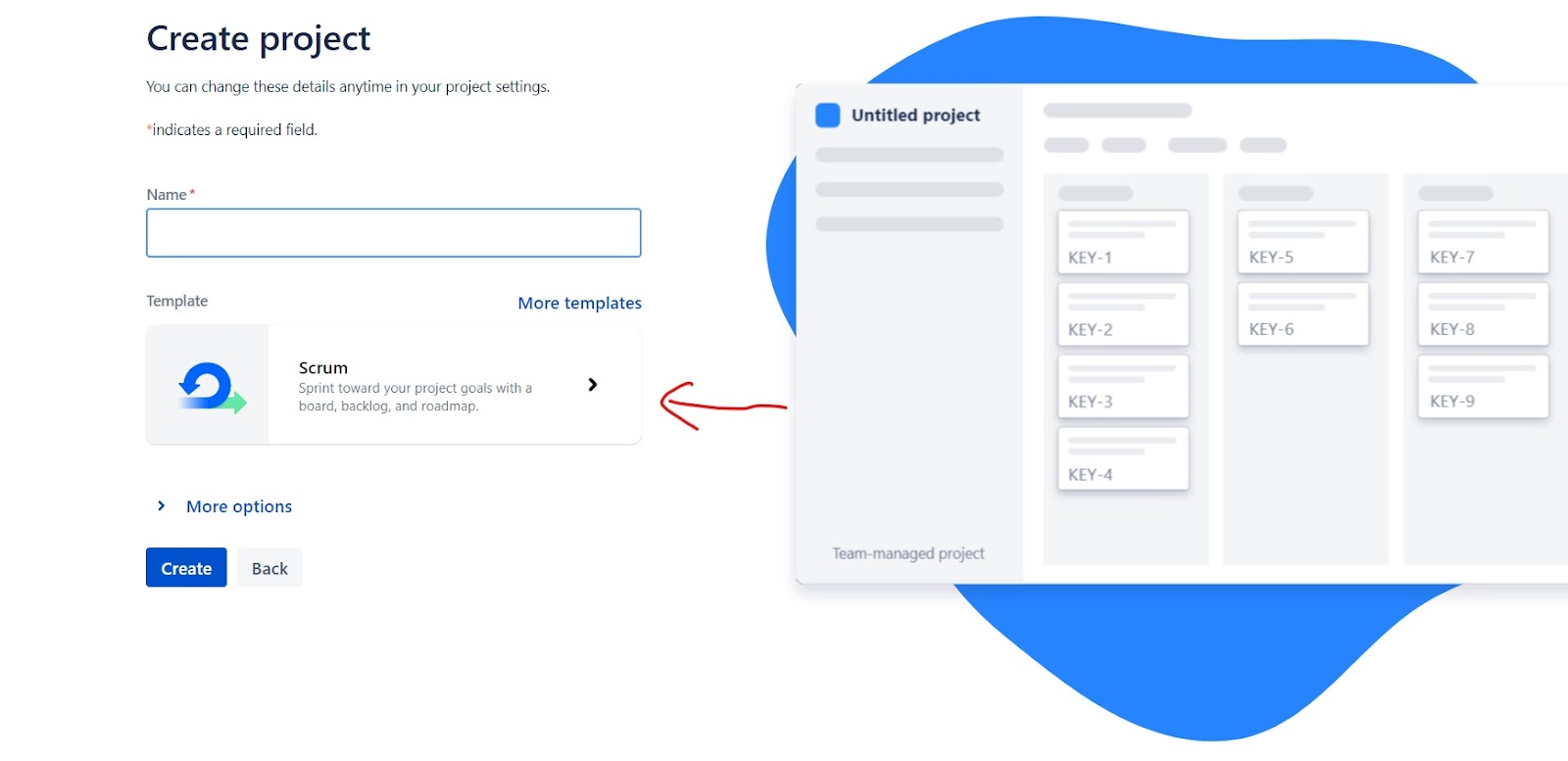
If you are new to Jira, sign up and create a new scrum project, as sprint only applies to scrum boards.
Create a sprint
With Jira, creating and adding issues to a sprint takes a few seconds thanks to the highly interactive user experience.
- On your Jira Software project, navigate to the left sidebar and select Backlog.** **
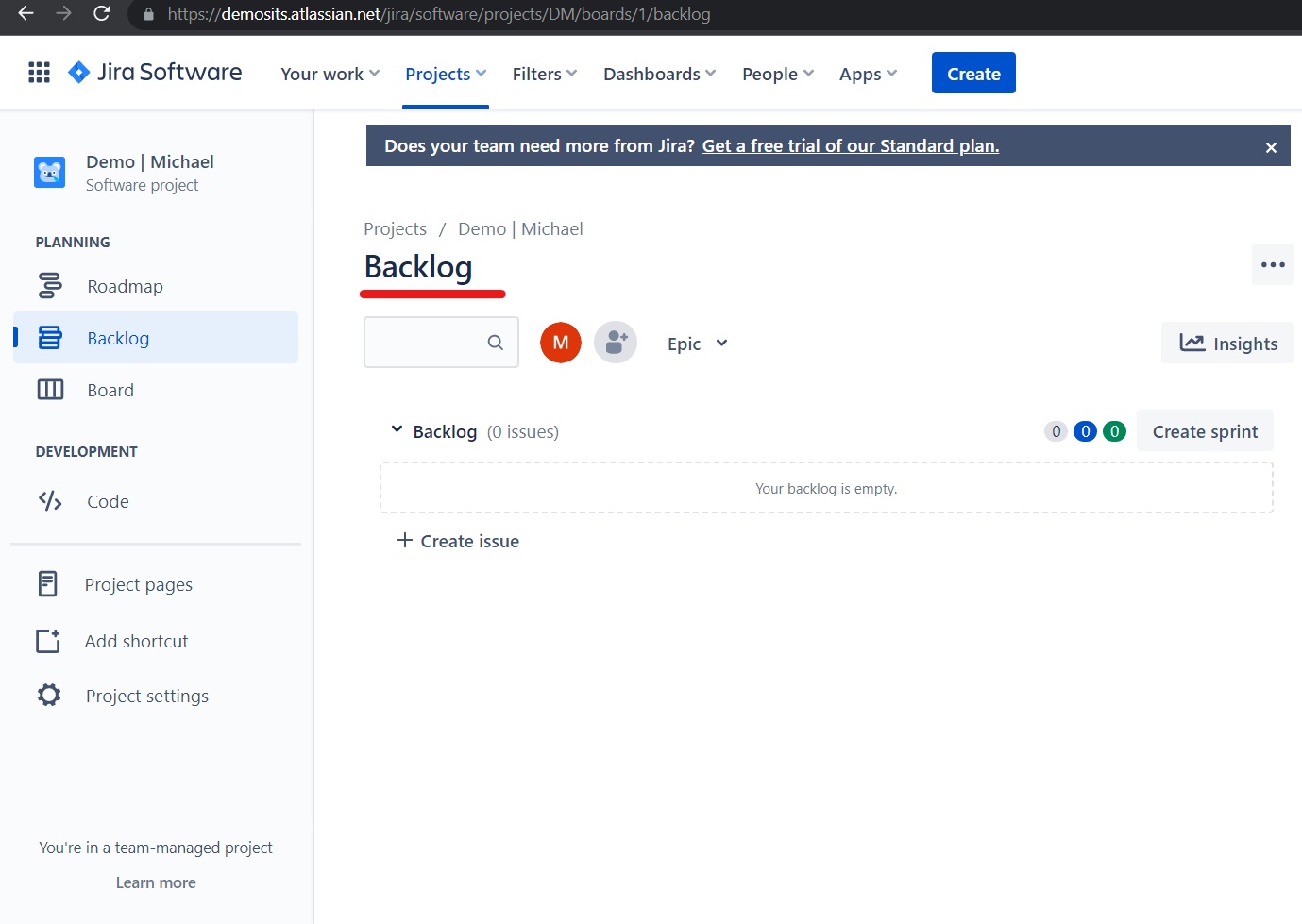
At the top of the backlog section, click Create sprint. You can add issues to a sprint after you've created it.
As shown above, a sprint named DM Sprint 1 is created, along with two issues. Sprints can be timed using Add dates, allowing teams to specify the sprint's start and end dates. The TO DO tag on the side of each issue allows you to change the status of a specific issue, such as IN PROGRESS or DONE.
Fill sprint with stories
You can create multiple sprints at a time and seamlessly move issues from one sprint to another with the** drag and drop **feature.
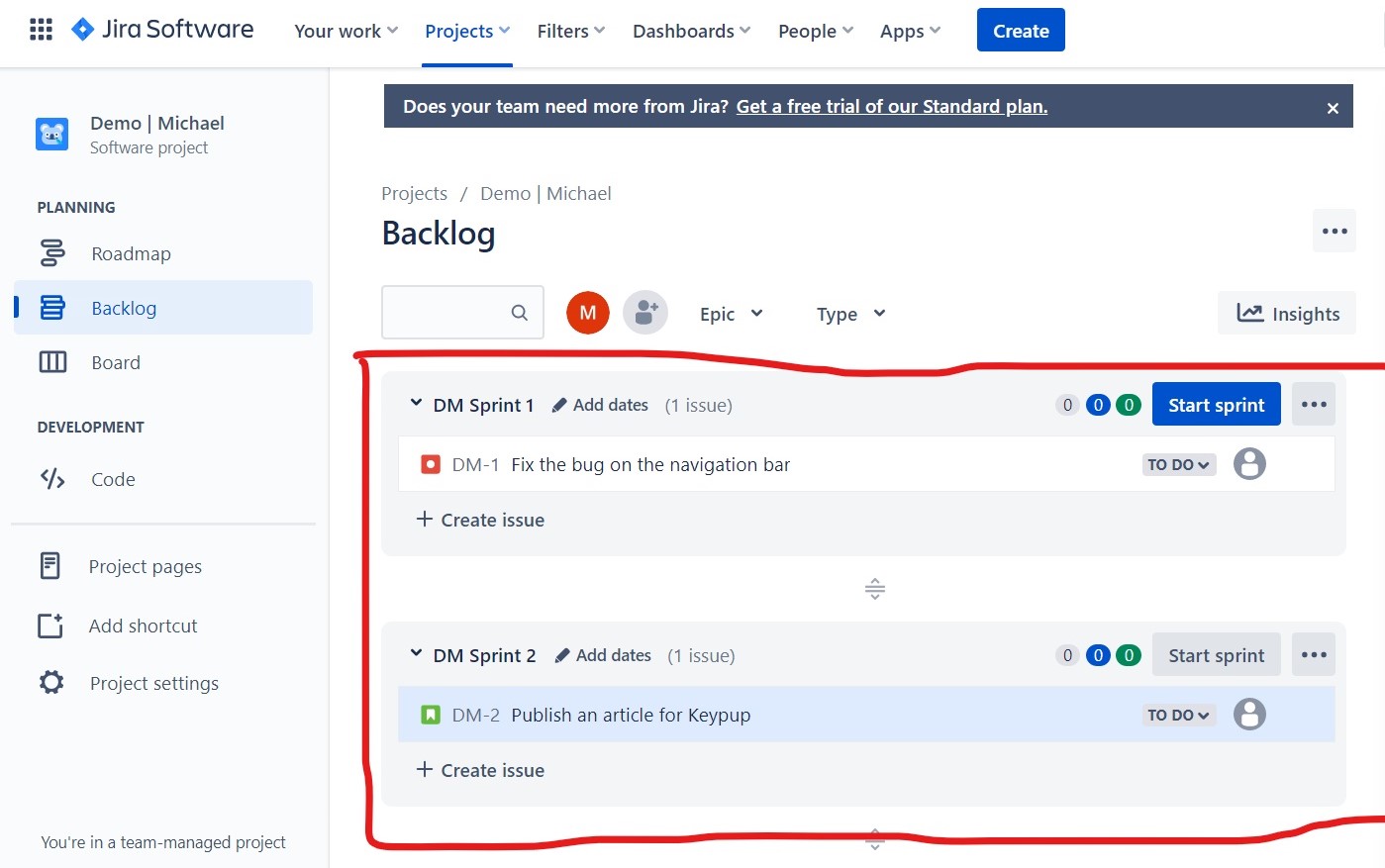
Issue DM-2 has been moved from Sprint 1 to Sprint 2. You can move issues from one sprint to another or create new ones for each sprint.
Drag an issue to the Backlog to remove it from a sprint, or right-click and select Send to Top of Backlog/Bottom of Backlog. You can also edit or bulk edit issues to move them from a sprint to another or to the product backlog.
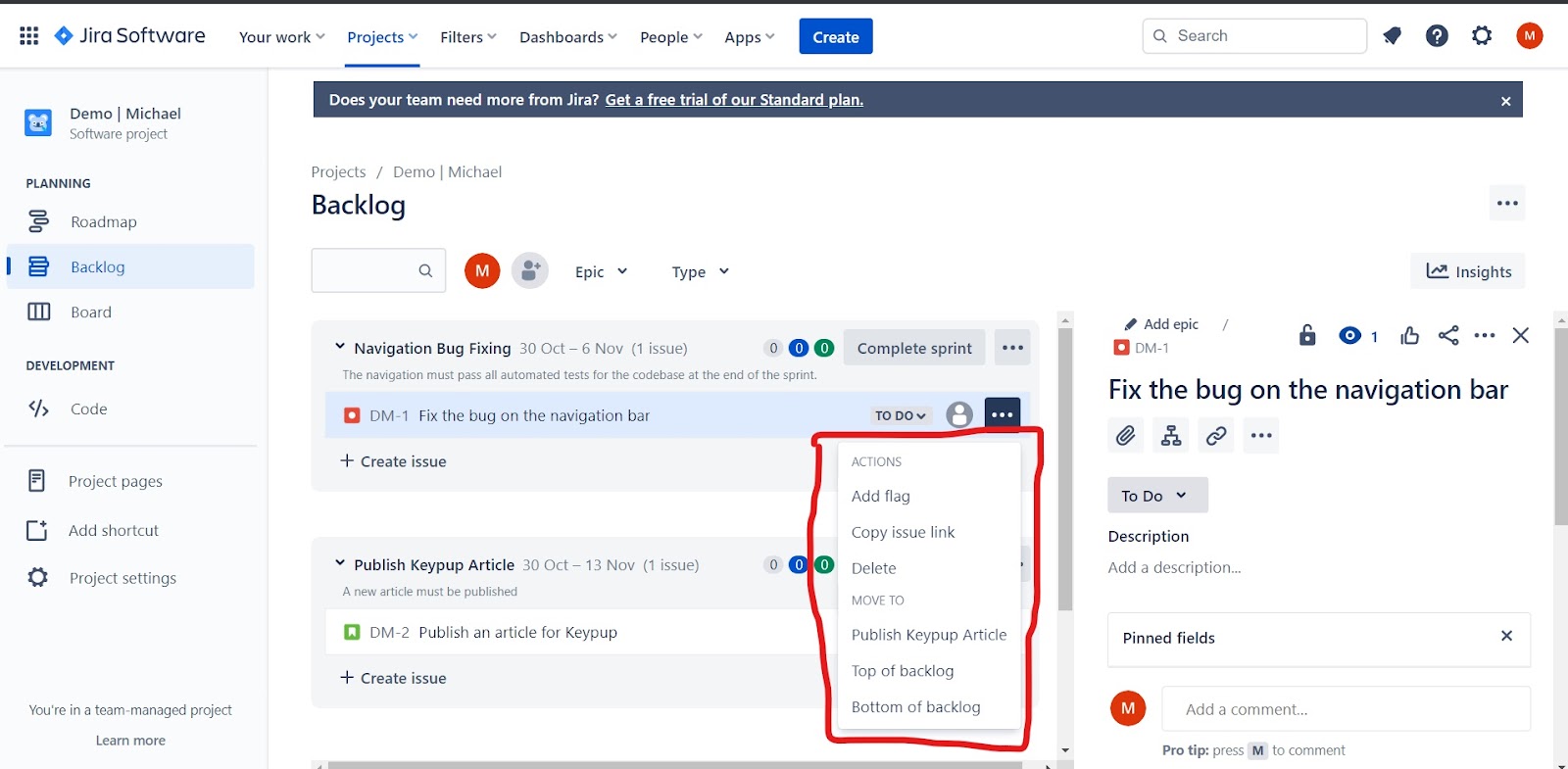
When you've decided which issues to include in your sprint, you're ready to begin the sprint.
Start sprint
Starting a sprint indicates that the set of issues is ready to be executed within a period of time.
- To start the DM Sprint 1, click Start Sprint.
- Update and populate the pop-up box with a new Sprint name, Start and End Dates, and a Sprint Goal.
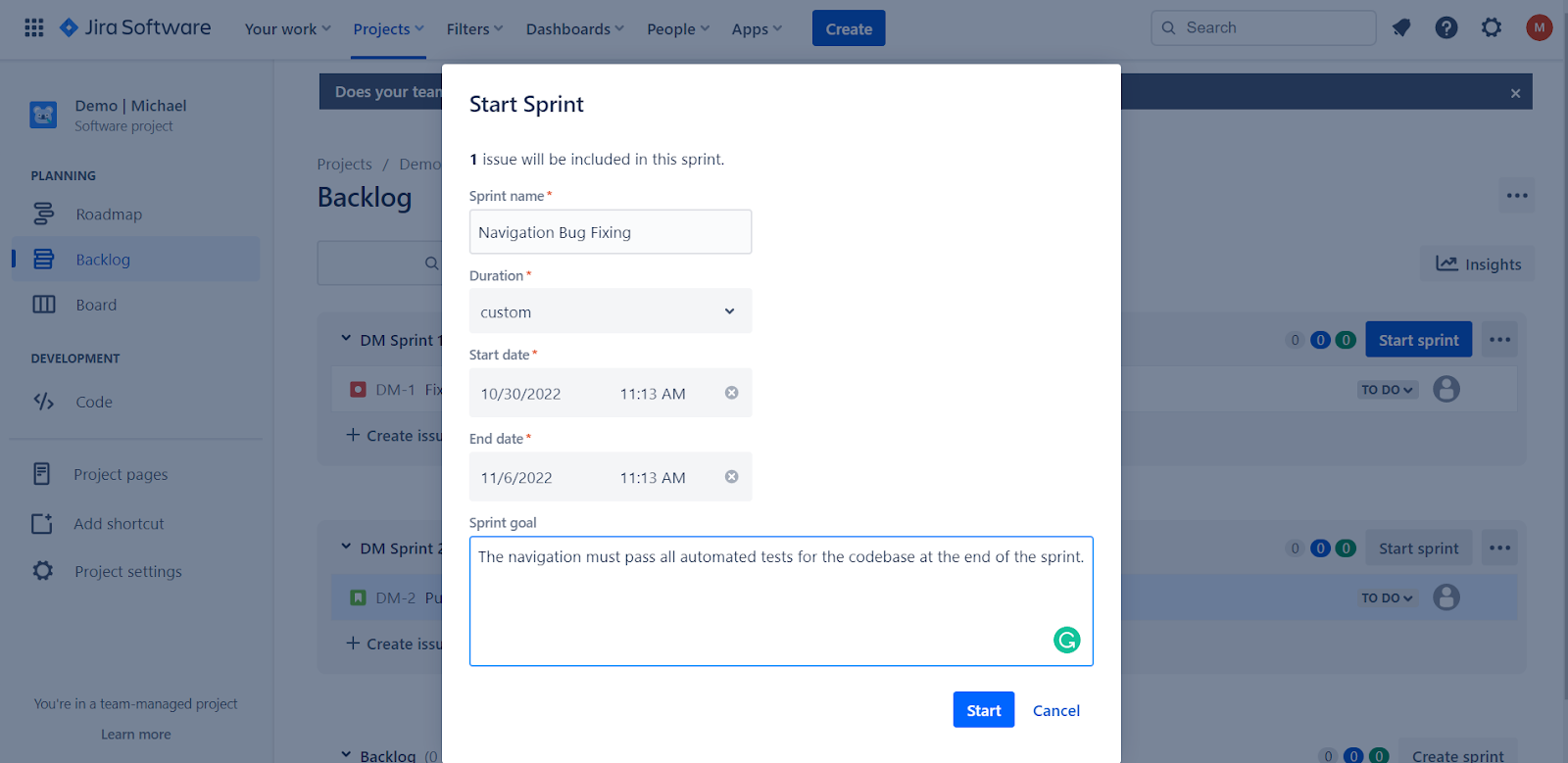
- The name of the DM Sprint 1 has been changed, and a sprint goal and duration have been set.
- You may need to change sprints after they've been created, especially if you're managing a large backlog. In the backlog, you can change the name, goal, and dates of a sprint, reorder it or delete it.
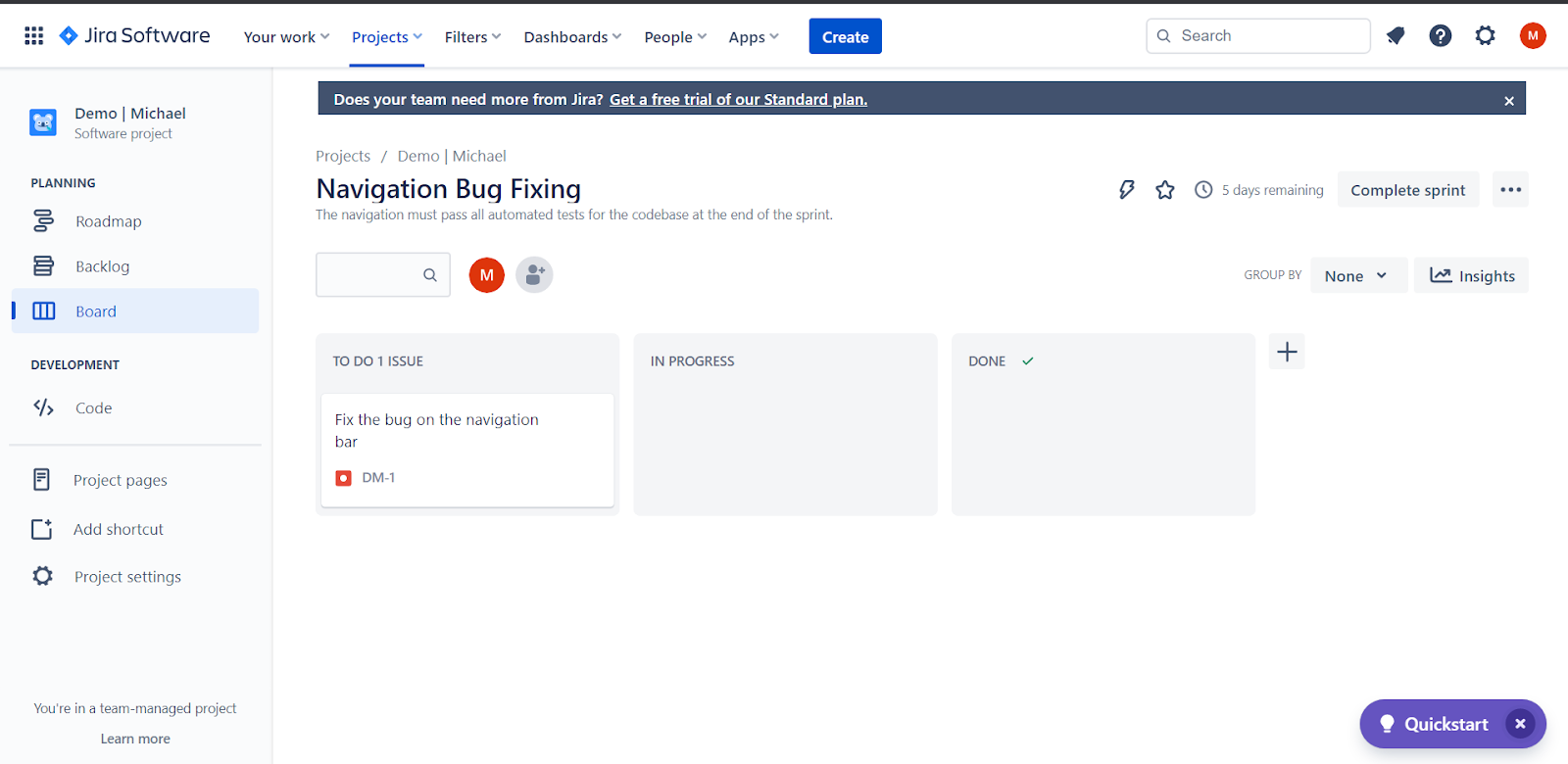
- By clicking on Board on the left sidebar, beneath the Backlog button, you can visualize the sprint in detail and update its status.
Monitor your team’s progress using Keypup
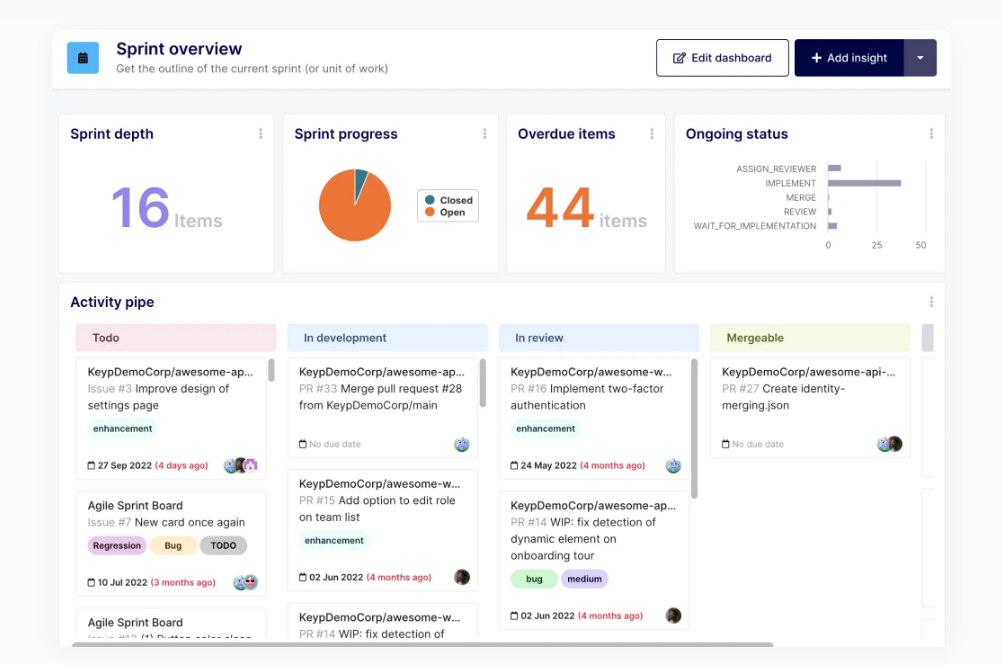
The sSprint overview progress report dashboard from Keypup aims to provide all of the information required to facilitate sprint planning and monitoring. Insights such as sprint progress, overdue items (pull requests and issues/tickets), sprint depth (total pull requests and issues/tickets due in a given period), and more are included.
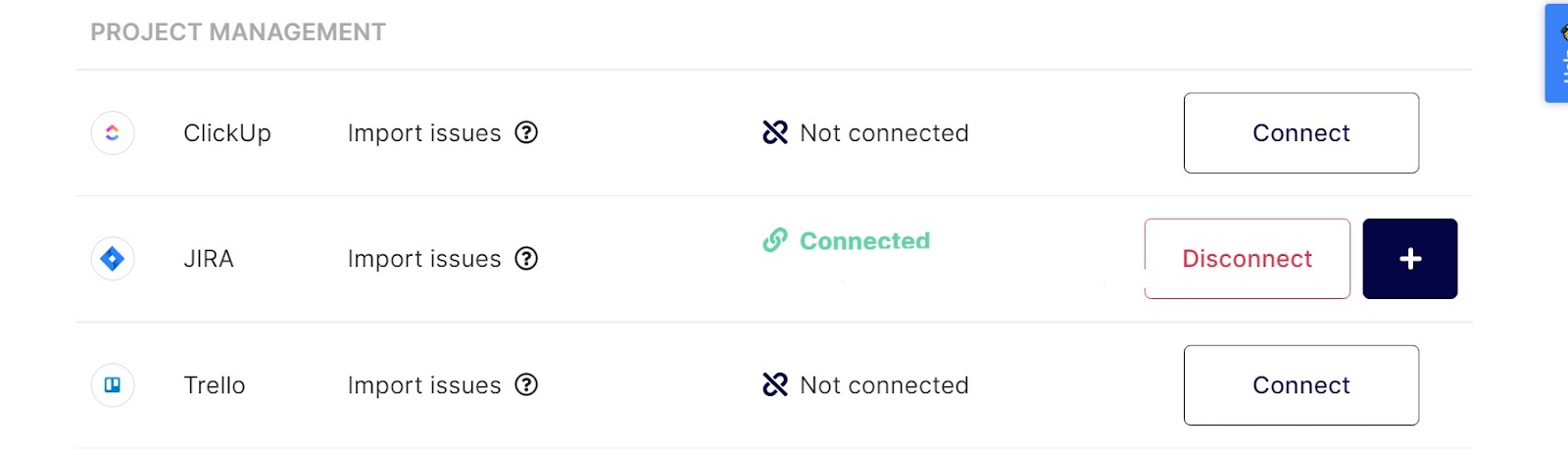
Once you sign-up for Keypup, you can connect your Jira project alongside its associated pull requests from your Git repositories to visualize your team’s progress through interactive and simple dashboards.
Close sprint
Sprints have a set duration, but they can be manually closed when the team's goals are met.
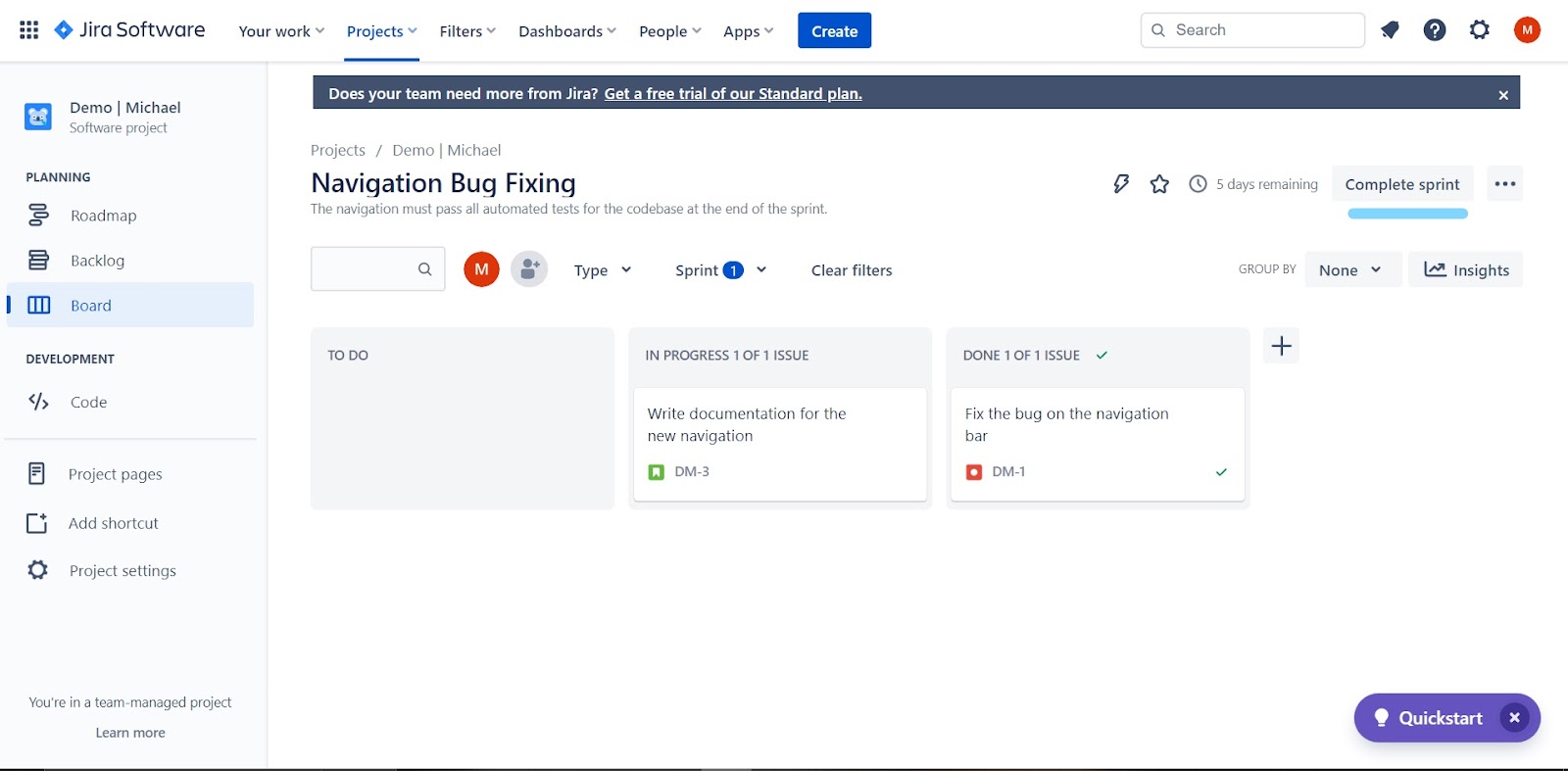
- Click on Board on the left sidebar, beneath the Backlog button.
- Select the Sprint you want to close.
- Click on Complete Sprint. **
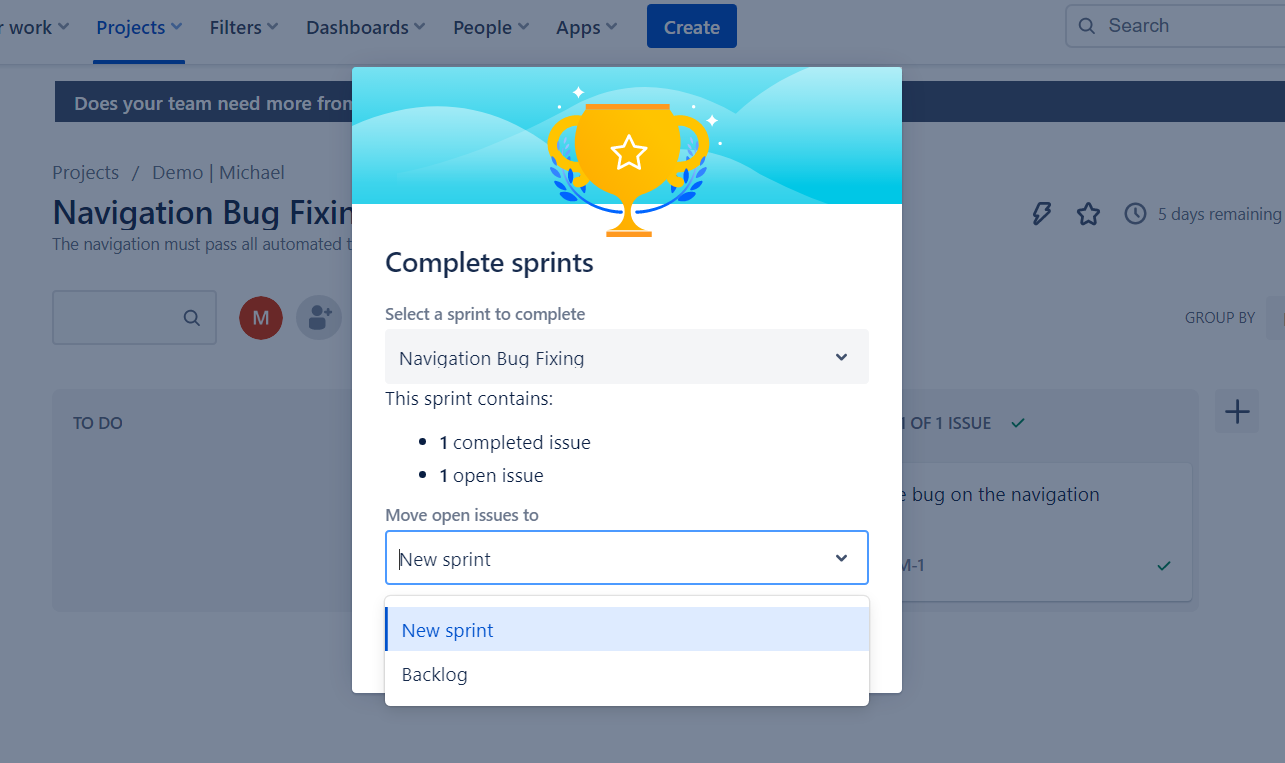
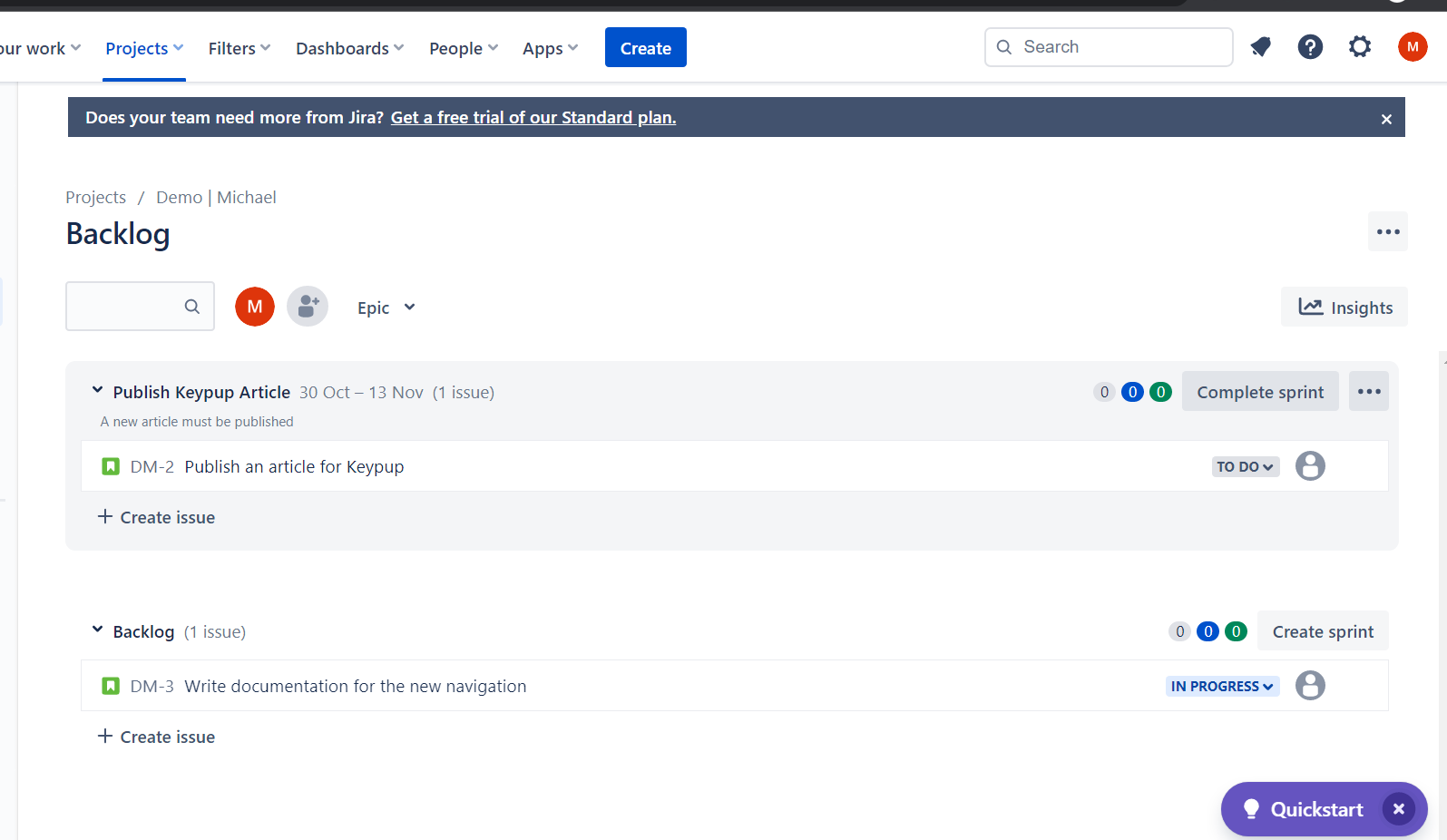
- When you click on Complete Sprint and you have an unresolved issue, you have the option to add it to a new sprint or send it to the backlog.
** **
Learn More
Keypup provides interactive dashboards for scrum and engineering teams using Jira with GitHub, GitLab, and/or Bitbucket to monitor their team's performance.
Keypup understands the importance of data to software engineering teams. Check out the Keypup blog for new resources to help you learn about engineering metrics such as DORA metrics, software delivery, and quality insights.