Connecting Apps and Enabling Projects in Keypup

Learn how to connect multiple Git/PM apps and enable projects/repos in Keypup to gain better visibility and optimize your software development processes. Harness the power of comprehensive engineering metrics and dashboards.

Celine Nabais
Celine Nabais LinkedIn
• 3 min read
Connecting Apps and Enabling Projects in Keypup

To gain meaningful insights and optimize your software development processes, it's crucial to connect multiple applications and enable projects in Keypup. By connecting and enabling all your active apps and projects, you can enhance visibility into your end-to-end software development workflows. In this tutorial, we will guide you through the process of connecting apps and enabling projects and repositories in Keypup, empowering you to harness the full potential of your metrics.

With Keypup, you control the applications and projects connected to the platform. During your onboarding, you will be prompted to select at least one application and one project to enable the associated dashboards and metrics. However, you can easily connect additional applications and projects at any point after your onboarding process.

To get started, simply follow the step-by-step instructions below:

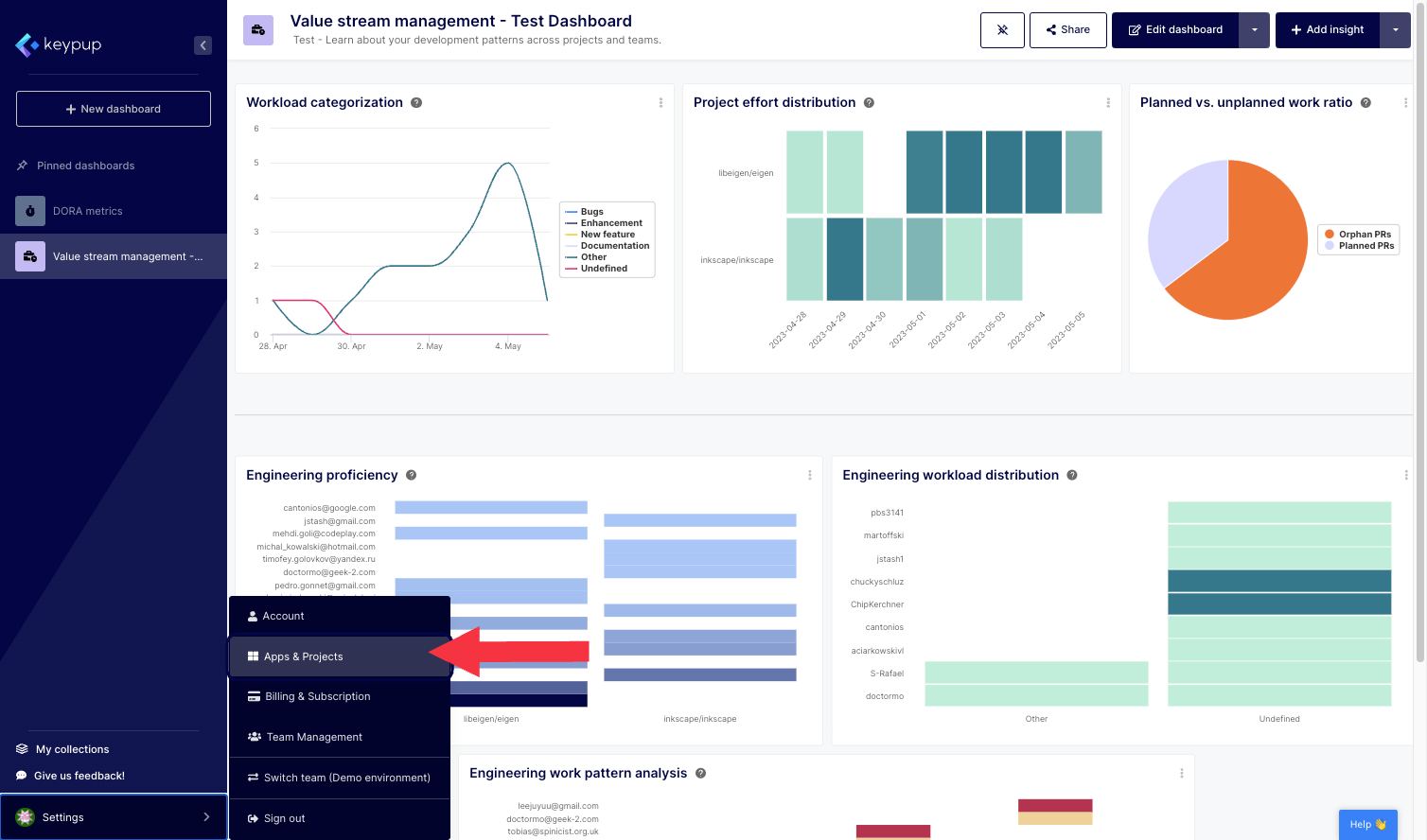
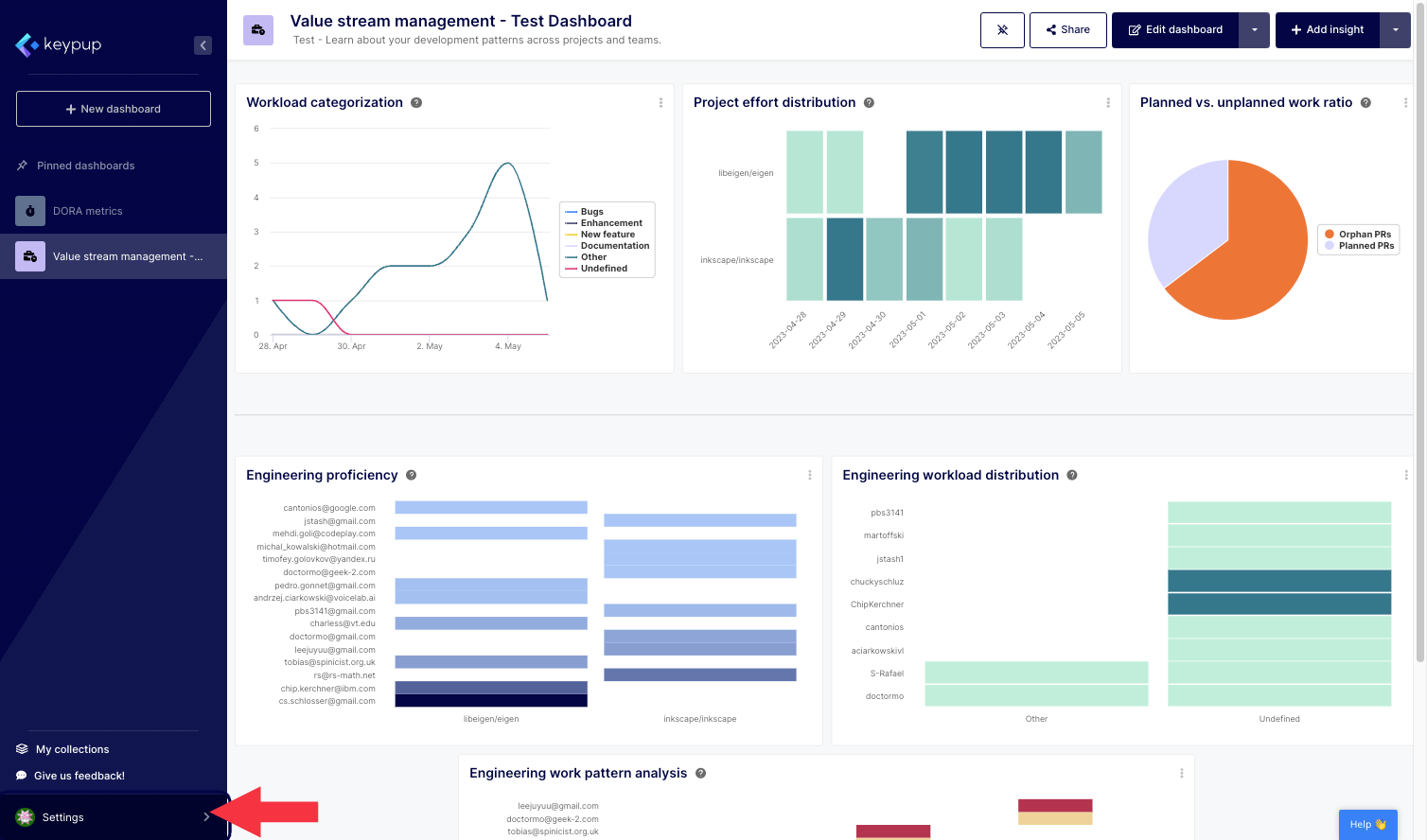
1. First, click on the “Settings” button located at the bottom of the left navigation panel.
Image

2. Then, select “Apps & Projects”.

Image

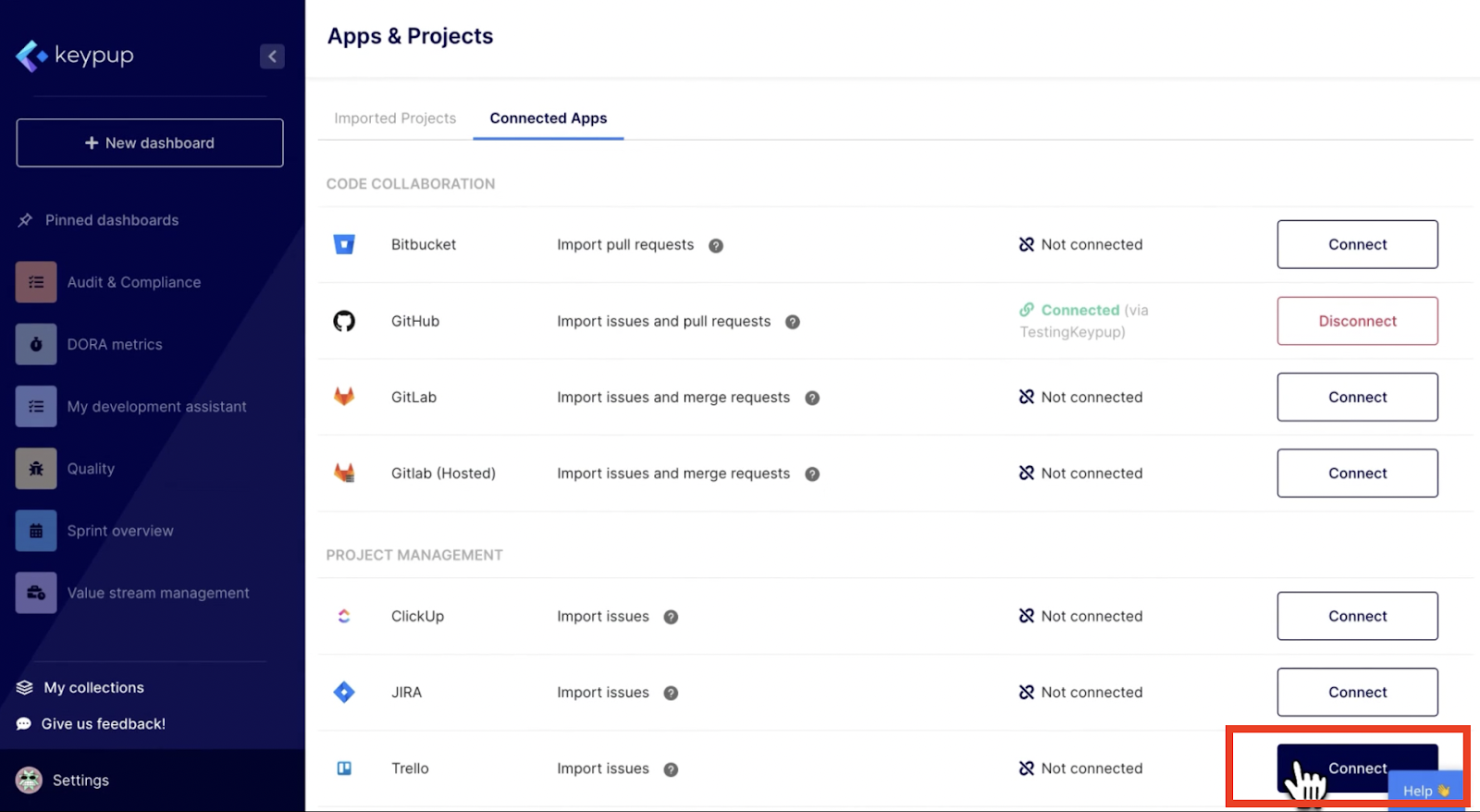
3. From this page, you can navigate to the “Connected Apps” tab located at the top of the page.

Image

4. Click on the “Connect” button located at the right of the application you would like to connect. In this example we will choose Trello. Note that for Jira, you have the ability to connect multiple Jira sites by clicking on the “+” button located next to the Jira connected site.
Image

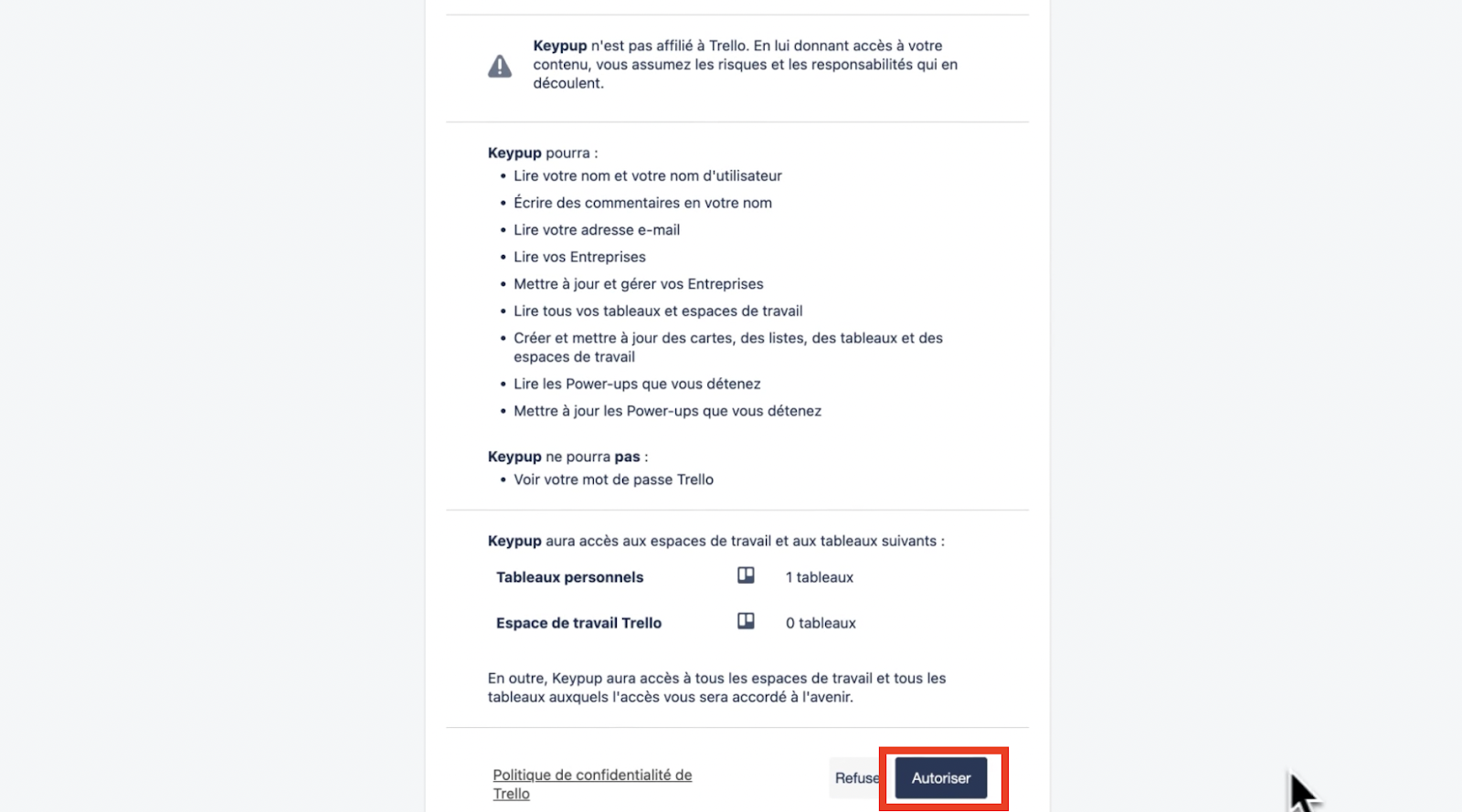
5. You’ll be directed to the selected application authorization page. Scroll down the page and authorize the application.
Image

6. You’ll be redirected to the “Imported projects” tab of the Apps and Projects page.

Image

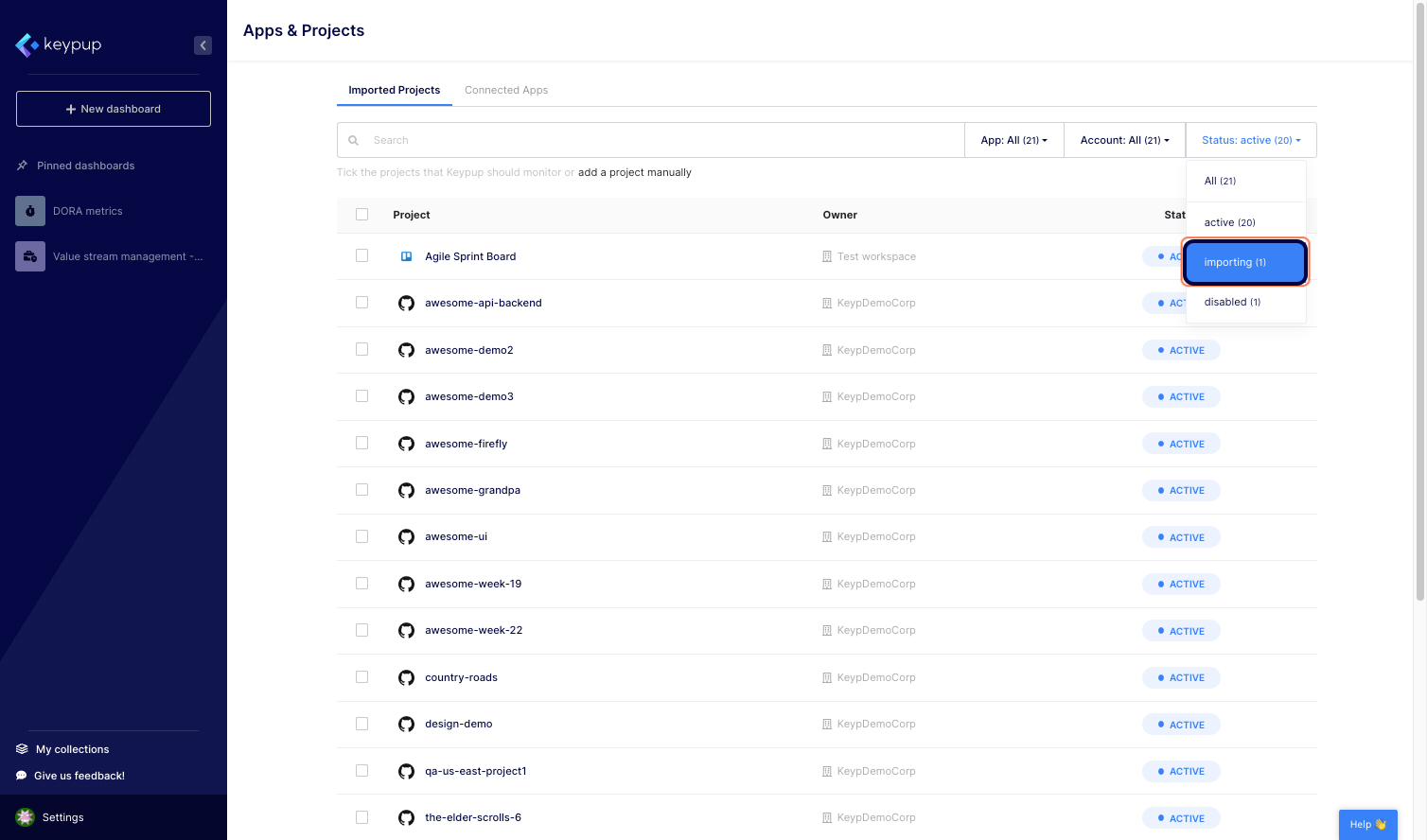
7. Click on the “Status” dropdown to select the disabled projects.

Image

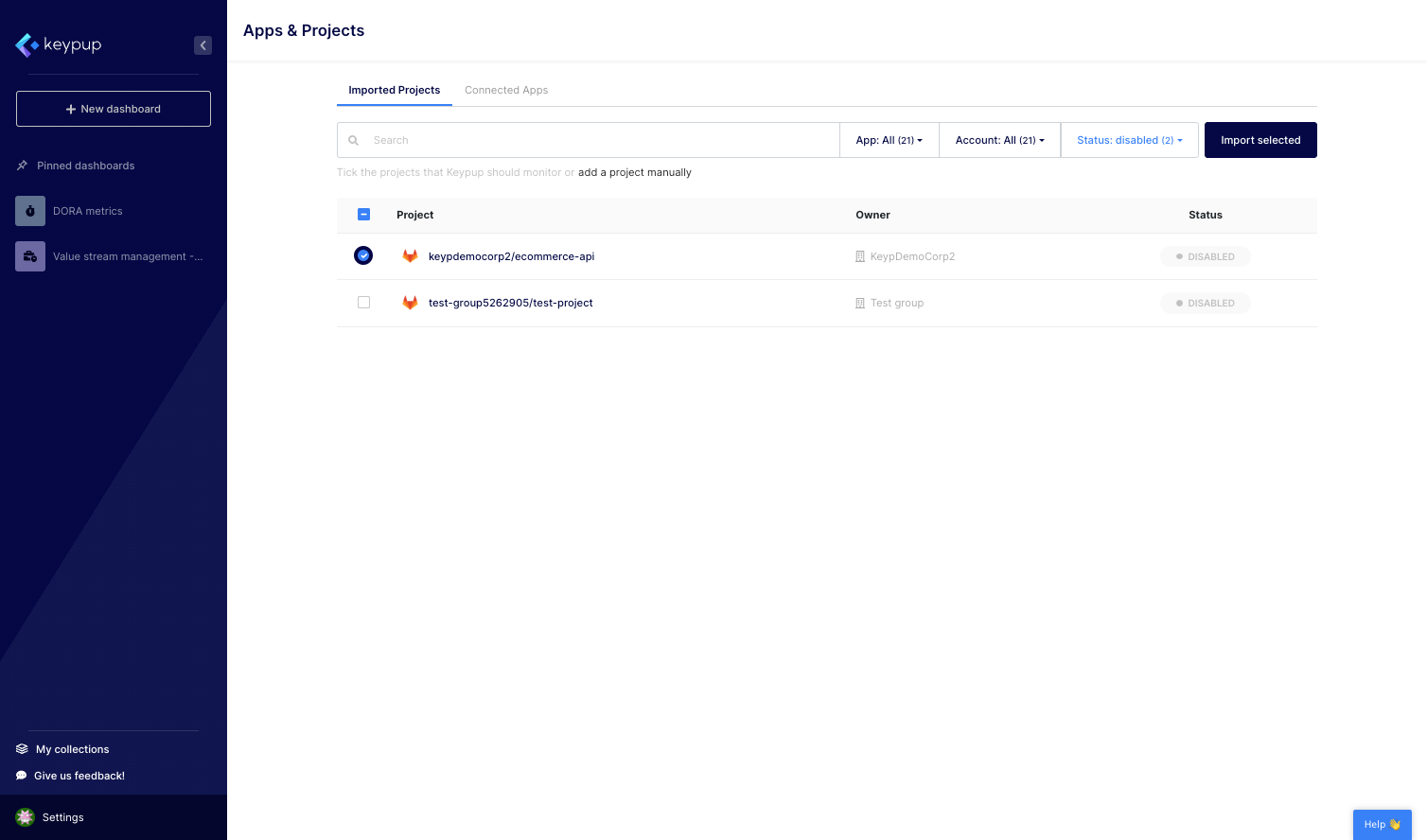
8. Check the corresponding boxes located at the left of all the projects you wish to import in Keypup.
Image

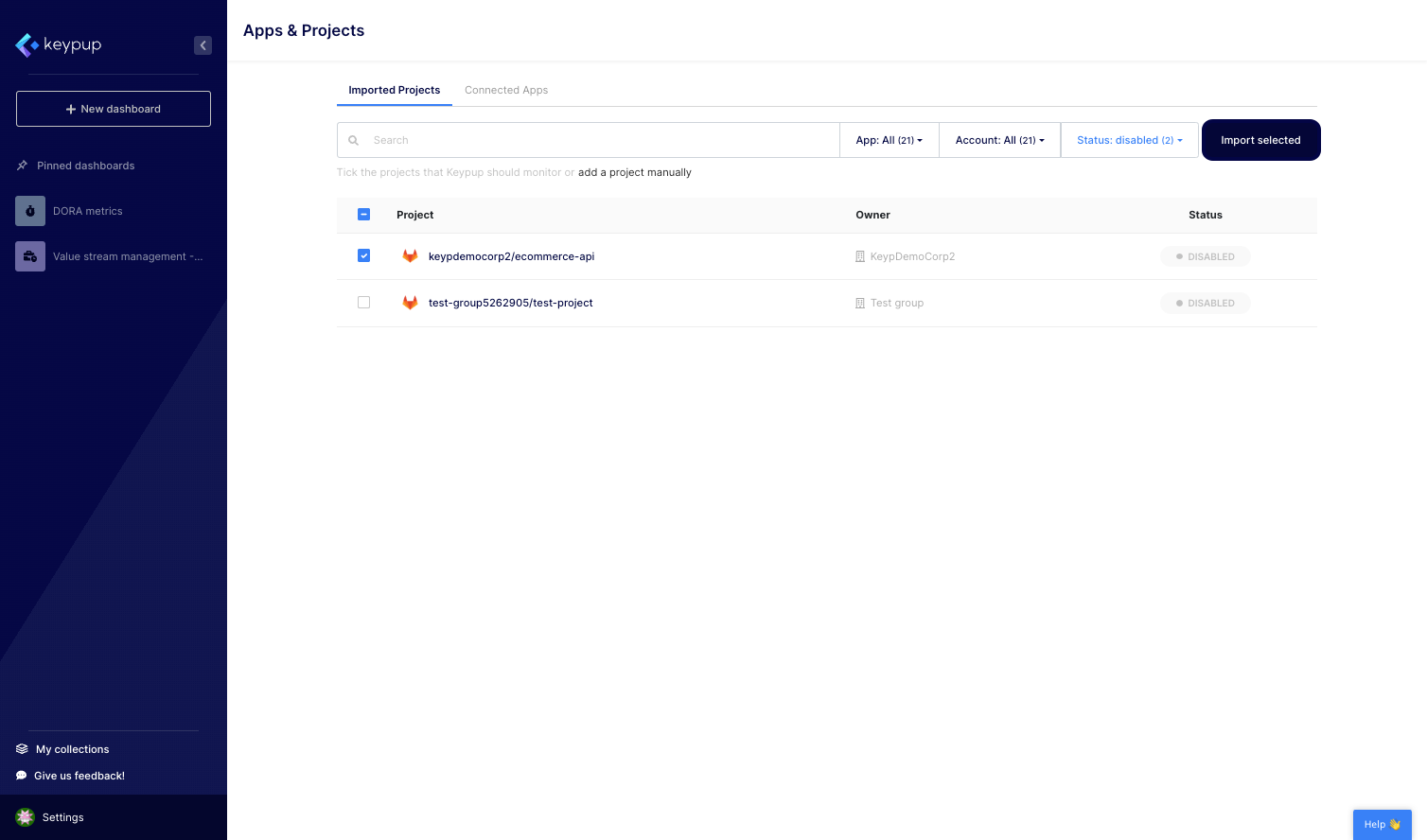
9. Then, click on the “Import selected” button located at the top right of the page.
Image

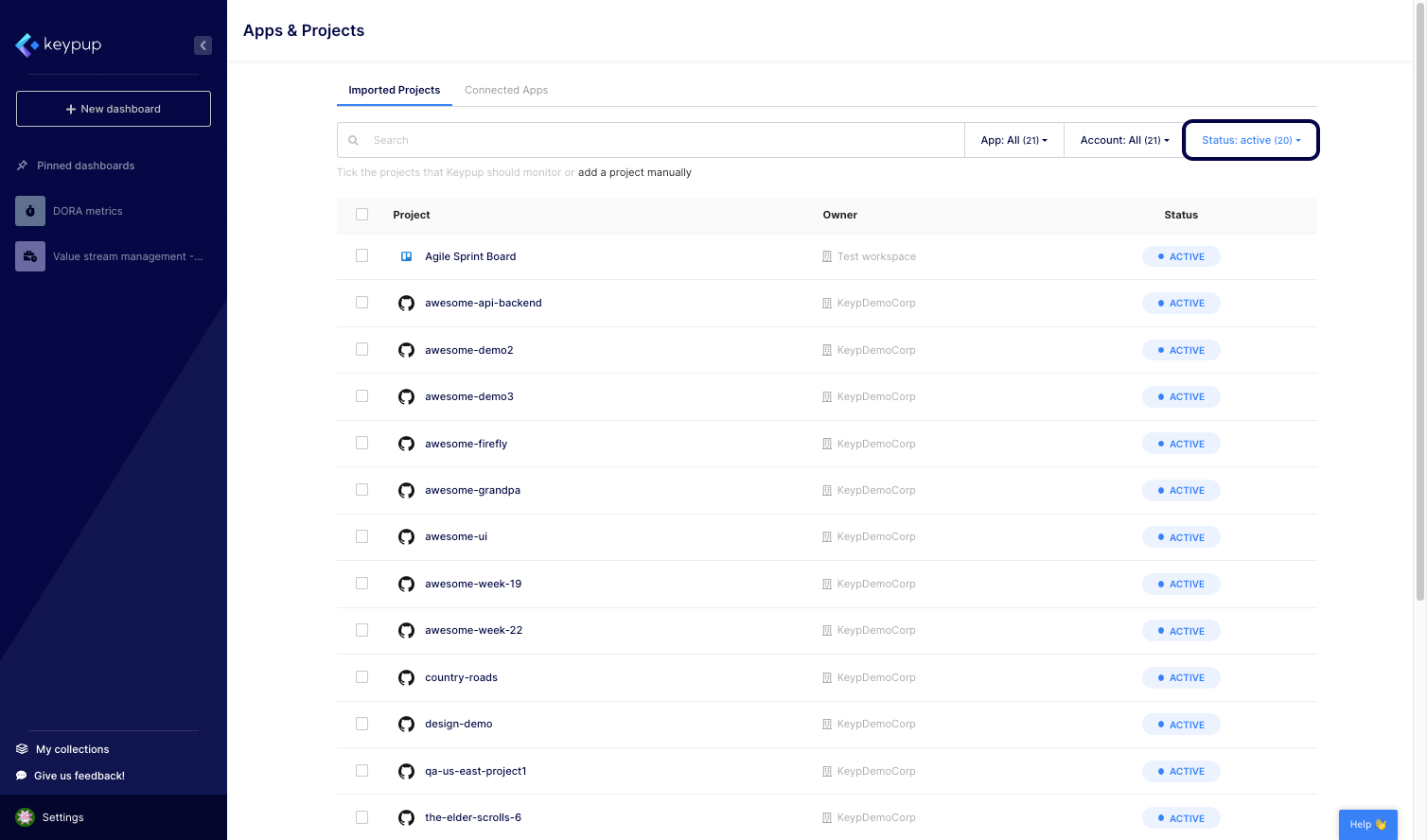
10. You can monitor the import status from this page as well as from the toaster located at the top right of any page in the platform. Based on your project size, the import duration may vary. In any case, you’ll be informed via email once your projects are ready to explore.
Image

Image

By connecting apps and enabling projects in Keypup, you unlock the power to analyze and optimize your software development processes comprehensively. This integration allows you to leverage the full potential of Keypup's metrics and dashboards, empowering you to make informed decisions and drive successful outcomes.

Follow the steps outlined in this tutorial to connect your apps and enable projects, and take control of your software development analytics in Keypup. If you haven’t yet, sign up here to start your data-driven engineering journey.


Ready to Transform Your Analytics?

Join teams already using AI to make data-driven decisions faster than ever.

Most Recent Articles

Data Ownership, Governance, and Inter-Departmental Silos: Who Owns the Definition of a Story Point?

Data Ownership, Governance, and Inter-Departmental Silos: Who Owns the Definition of a Story Point?

Centralizing SDLC data across ten business units exposes a governance vacuum long before it delivers insight: seven competing "story point" scales, four business units with no named data owner, and a workflow taxonomy nobody was ever assigned to define. This isn't a GDPR problem — it's a political and technical negotiation over who owns what data, and who is accountable when a poorly maintained JIRA board quietly skews a portfolio-wide metric. Discover how Keypup MCP makes data ownership, definition consistency, and governance maturity measurable across every business unit.

Stephane Ibos
Change Management and Cross-Functional Alignment: Getting HR, Product, and Marketing to Trust Engineering Metrics

Change Management and Cross-Functional Alignment: Getting HR, Product, and Marketing to Trust Engineering Metrics

Rolling out SDLC analytics across an enterprise takes more than an engineering VP's buy-in. If HR misreads flow metrics in performance reviews, or Product Management keeps demanding features while ignoring system health, the initiative quietly becomes an "engineering-only project" that never earns organization-wide trust. Discover how Keypup MCP builds the guardrails, translations, and cross-functional accountability that make SDLC analytics stick beyond engineering.

Liam Davis
Strategic Vendor Selection and Platform Fatigue: How to Add an SEI Platform Without Adding Another Dashboard

Strategic Vendor Selection and Platform Fatigue: How to Add an SEI Platform Without Adding Another Dashboard

Enterprises already juggle dozens of tools for project management, CI/CD, monitoring, and HR. Before adding a Software Engineering Intelligence platform, IT architects and procurement teams need to weigh true integration cost, training burden, and vendor lock-in risk — not just the license fee. Discover how Keypup MCP delivers engineering insight through the tools your teams already use, with no new dashboard, no new login, and a fraction of the total cost of ownership.

Thomas Williams