How to Create an Engineering Dashboard from Scratch Using Keypup

Learn how to create a customized engineering dashboard from scratch using Keypup's platform. Highlight the metrics that matter most to your team and stakeholders, and drive your team toward success.

Celine Nabais
Celine Nabais LinkedIn
2 min read
How to Create an Engineering Dashboard from Scratch Using Keypup

As a tech leader, you understand the importance of having a clear and effective software data story to communicate with your team and stakeholders. However, not all metrics are relevant for every audience, and you need to be able to adapt your metrics and reports to fit your specific needs. That's where Keypup's engineering dashboards feature comes in handy. With this powerful tool, you can create a customized dashboard that meets the unique needs of your team and stakeholders from scratch or from a template.

Here are the steps to create an engineering dashboard from scratch using Keypup:

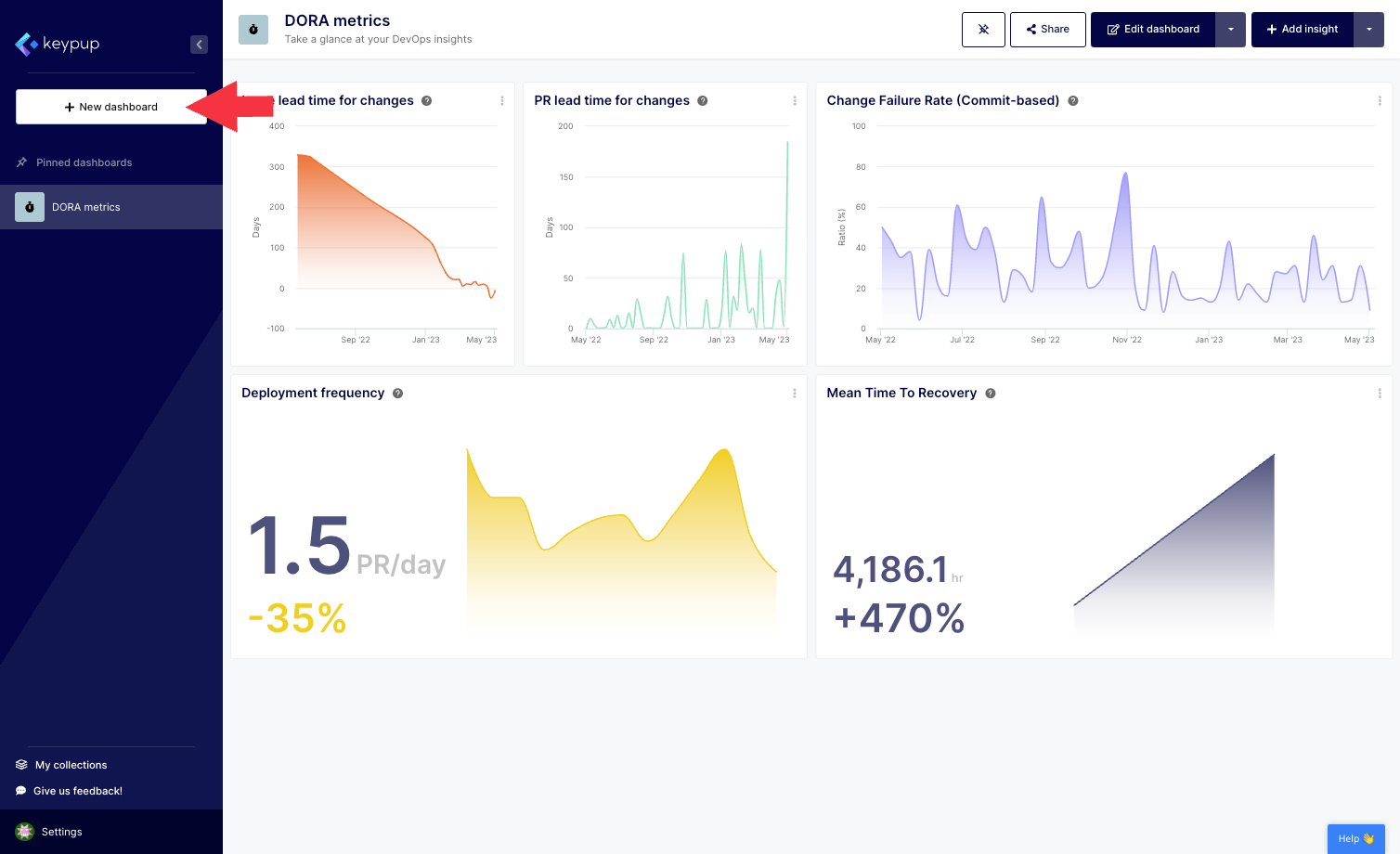
1. First, click on the "New dashboard" button located at the top of the left navigation panel.
Image

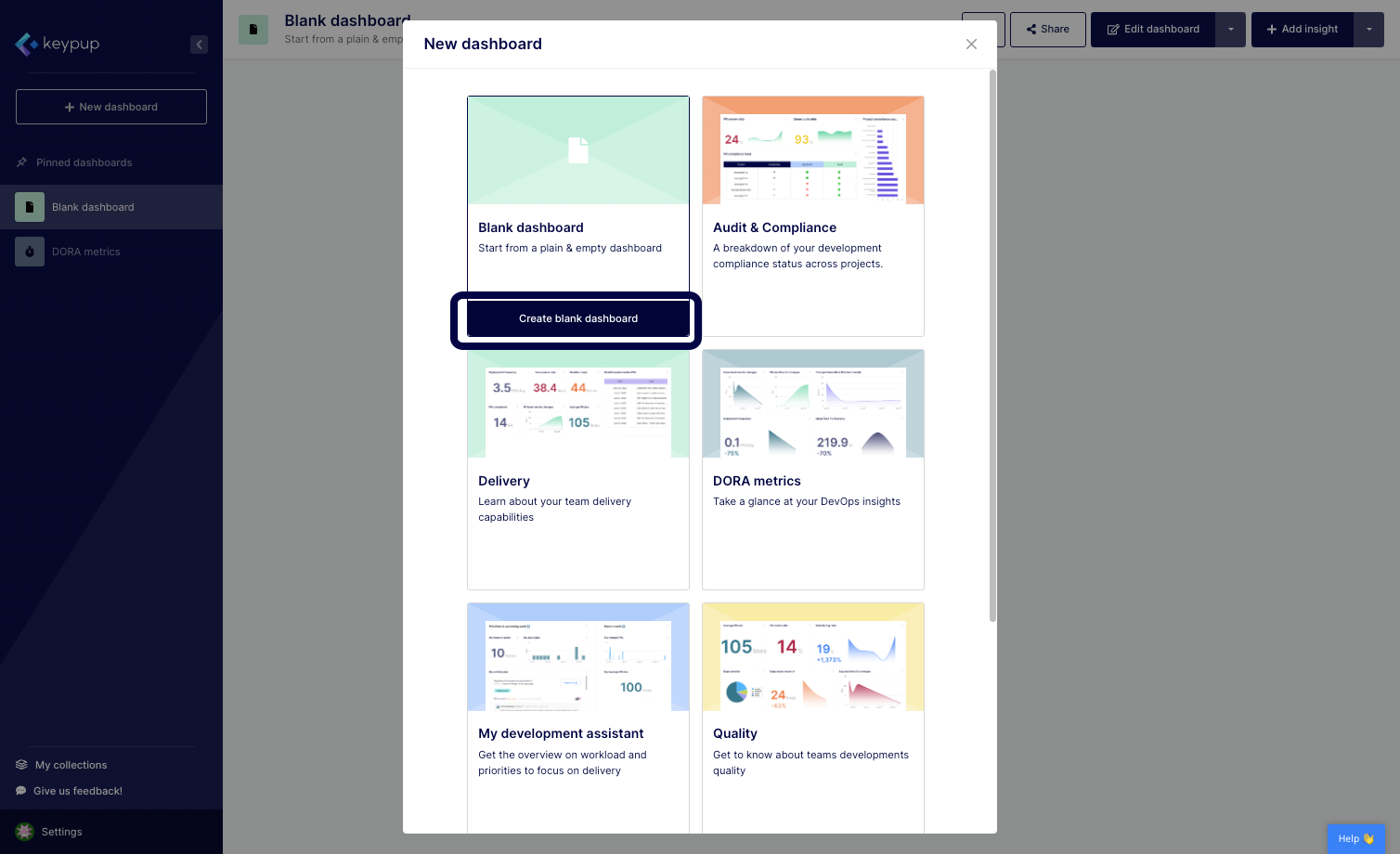
2. Select the blank dashboard option by clicking on the "Create blank dashboard" button below your choice.
Image

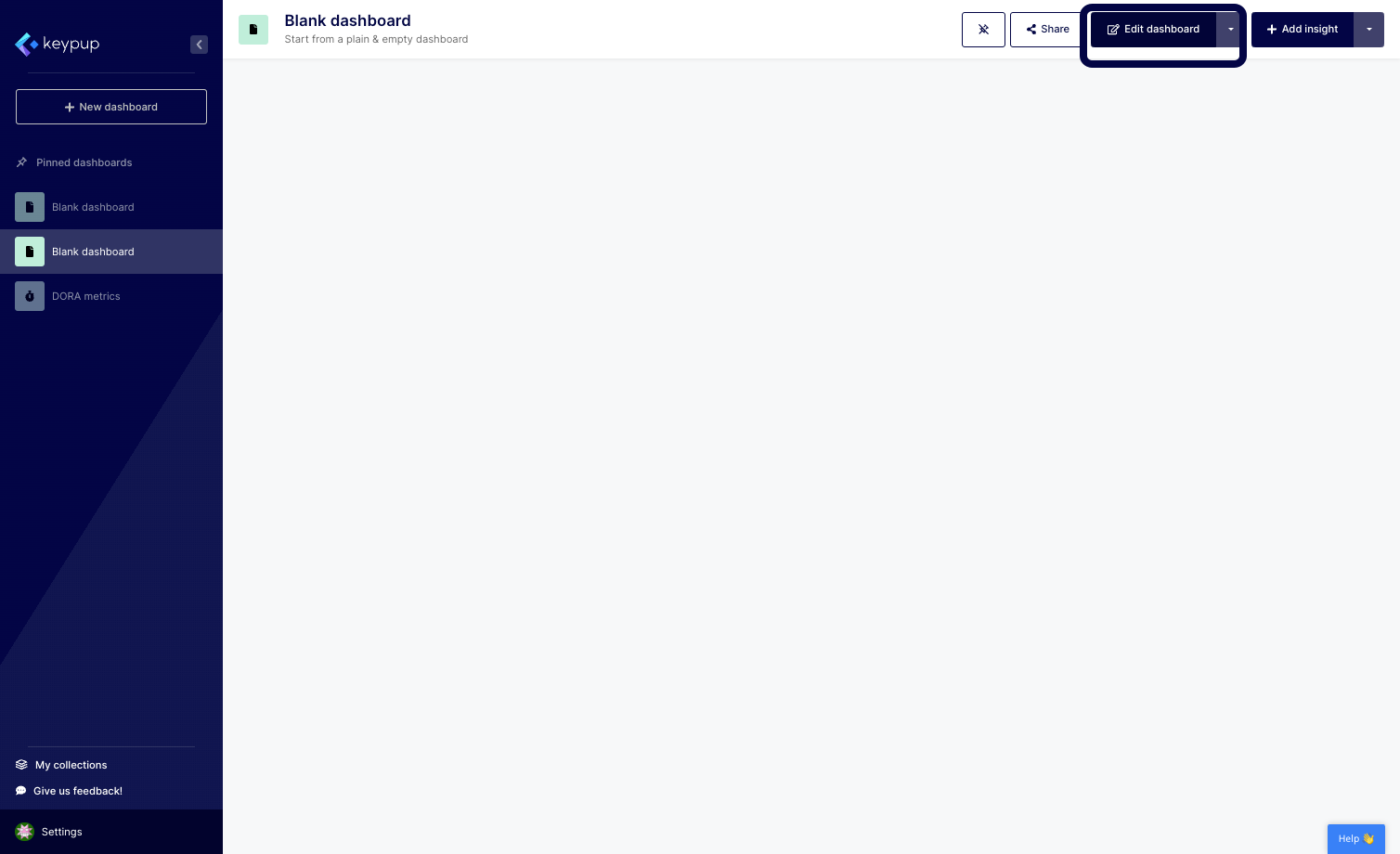
3. Your blank dashboard is populated. Click on the "Edit dashboard" button located at the top right of your screen.
Image

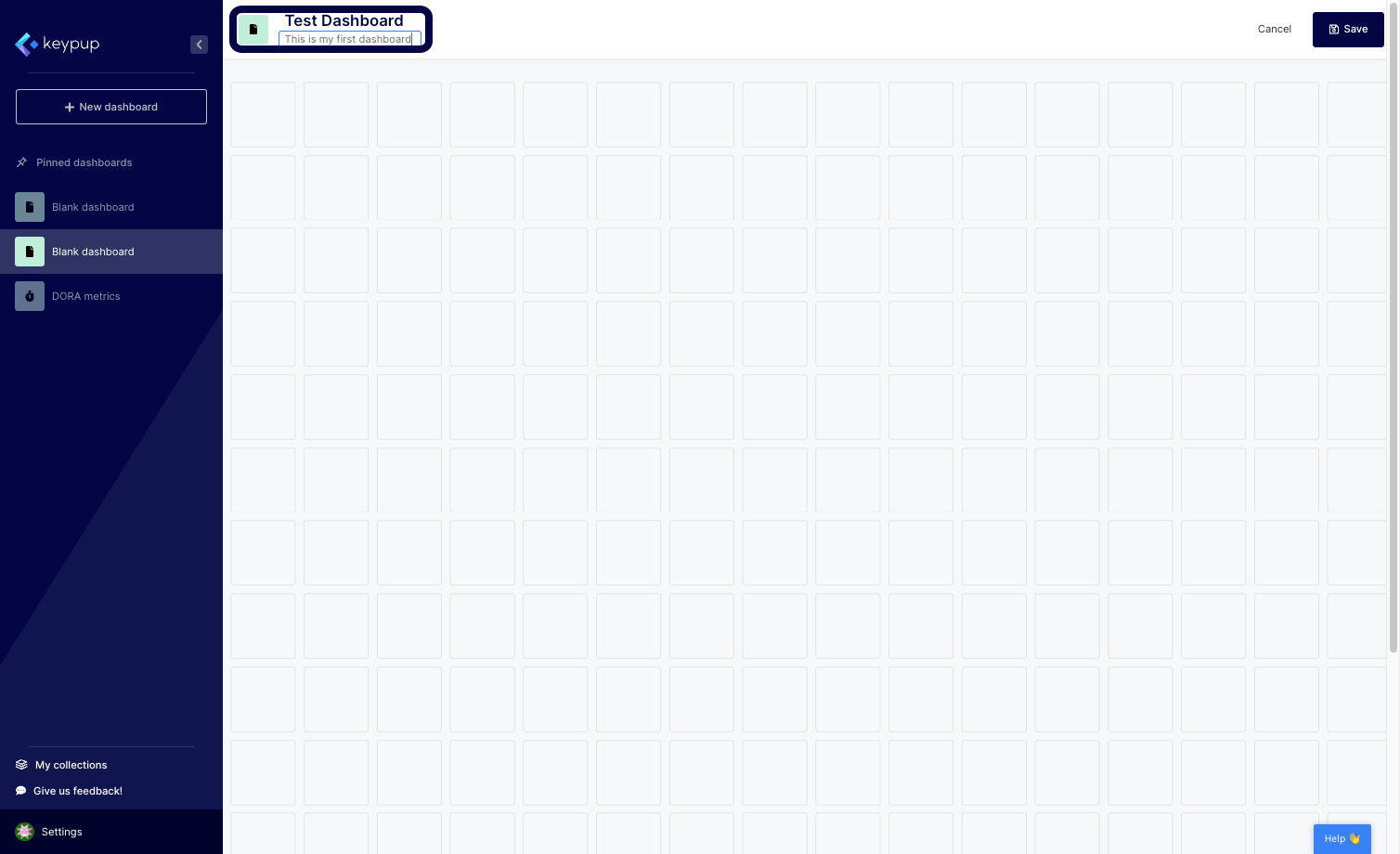
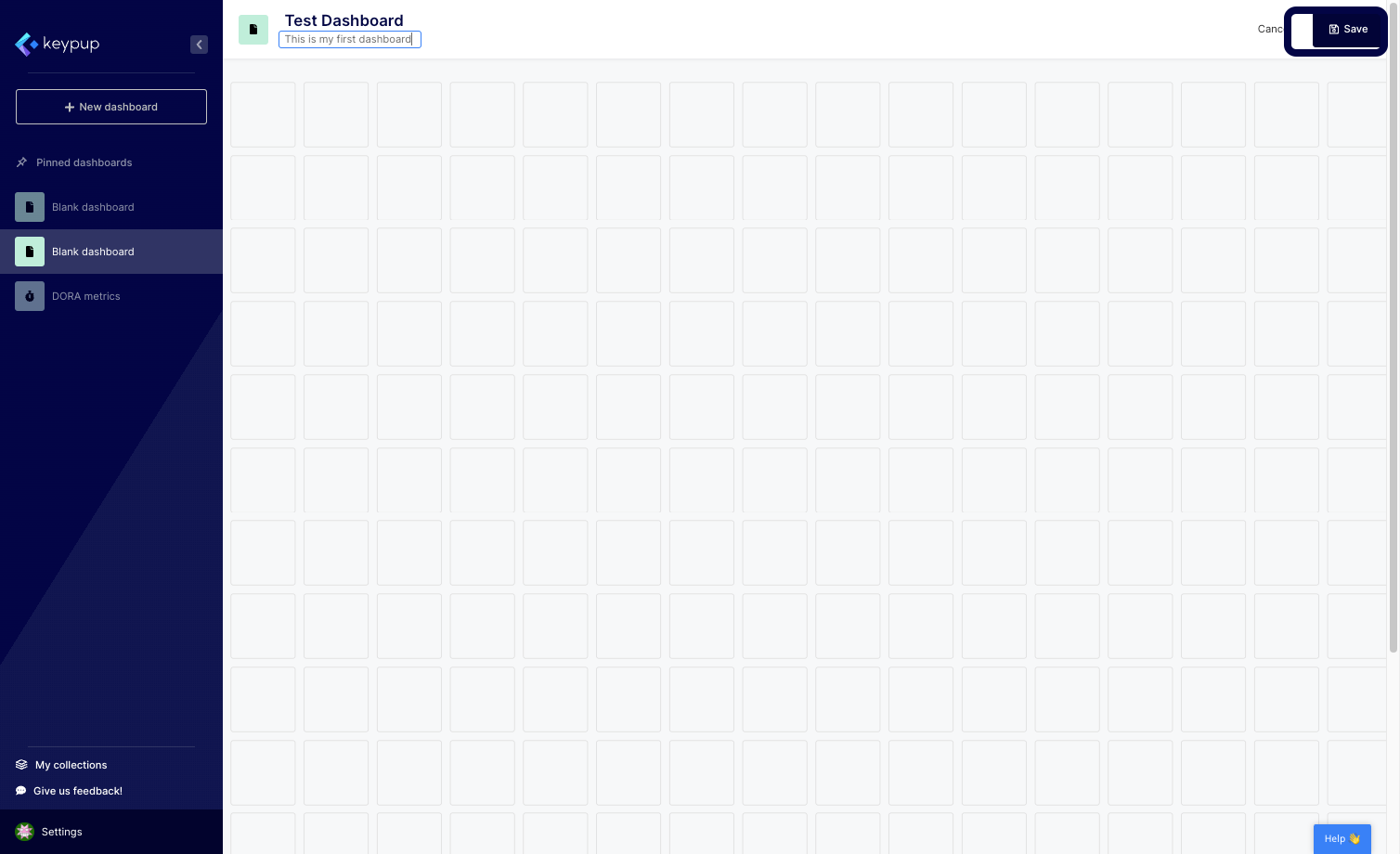
4. From here, you can edit the dashboard title, description, and image.
Image

5. Once done, click on the "Save" button located at the top right of your screen.
Image

Now, your engineering dashboard is ready to be fully customized using metrics, reports, text widgets, and more.

With Keypup's engineering dashboard feature, you have the flexibility to create a dashboard that fits your unique needs. Whether you need to provide clear goals or OKRs to your team members or communicate during your board meetings, you can create a customized dashboard that highlights the metrics that matter most to your audience.

In conclusion, creating an engineering dashboard from scratch using Keypup is a simple and powerful way to communicate your software data story with your team and stakeholders. By customizing your dashboard to fit your unique needs, you can ensure that you are highlighting the metrics that matter most and driving your team towards success. Try Keypup's platform today to see how you can create a customized engineering dashboard that fits your unique needs.


Ready to Transform Your Analytics?

Join teams already using AI to make data-driven decisions faster than ever.

Most Recent Articles

Data Ownership, Governance, and Inter-Departmental Silos: Who Owns the Definition of a Story Point?

Data Ownership, Governance, and Inter-Departmental Silos: Who Owns the Definition of a Story Point?

Centralizing SDLC data across ten business units exposes a governance vacuum long before it delivers insight: seven competing "story point" scales, four business units with no named data owner, and a workflow taxonomy nobody was ever assigned to define. This isn't a GDPR problem — it's a political and technical negotiation over who owns what data, and who is accountable when a poorly maintained JIRA board quietly skews a portfolio-wide metric. Discover how Keypup MCP makes data ownership, definition consistency, and governance maturity measurable across every business unit.

Stephane Ibos
Change Management and Cross-Functional Alignment: Getting HR, Product, and Marketing to Trust Engineering Metrics

Change Management and Cross-Functional Alignment: Getting HR, Product, and Marketing to Trust Engineering Metrics

Rolling out SDLC analytics across an enterprise takes more than an engineering VP's buy-in. If HR misreads flow metrics in performance reviews, or Product Management keeps demanding features while ignoring system health, the initiative quietly becomes an "engineering-only project" that never earns organization-wide trust. Discover how Keypup MCP builds the guardrails, translations, and cross-functional accountability that make SDLC analytics stick beyond engineering.

Liam Davis
Strategic Vendor Selection and Platform Fatigue: How to Add an SEI Platform Without Adding Another Dashboard

Strategic Vendor Selection and Platform Fatigue: How to Add an SEI Platform Without Adding Another Dashboard

Enterprises already juggle dozens of tools for project management, CI/CD, monitoring, and HR. Before adding a Software Engineering Intelligence platform, IT architects and procurement teams need to weigh true integration cost, training burden, and vendor lock-in risk — not just the license fee. Discover how Keypup MCP delivers engineering insight through the tools your teams already use, with no new dashboard, no new login, and a fraction of the total cost of ownership.

Thomas Williams